
Wealth Operations CRM
PulseTec · Pulse CRM
Run client, compliance, portfolio, and revenue workflows from one controlled system
One controlled layer for advisory, revenue, and evidence — built for regulated advisory firms.
Role-scoped access
Scoped by adviser, ops, and compliance roles
Traceable activity history
Actions timestamped in workflow history
Versioned document evidence
Versioned files tied to client records
Integration-ready boundaries
Integration boundaries without losing custody
Product proof
See the operating layer in practice
Live views from the platform—firm visibility, structured workflows, and compliance queues in one system.
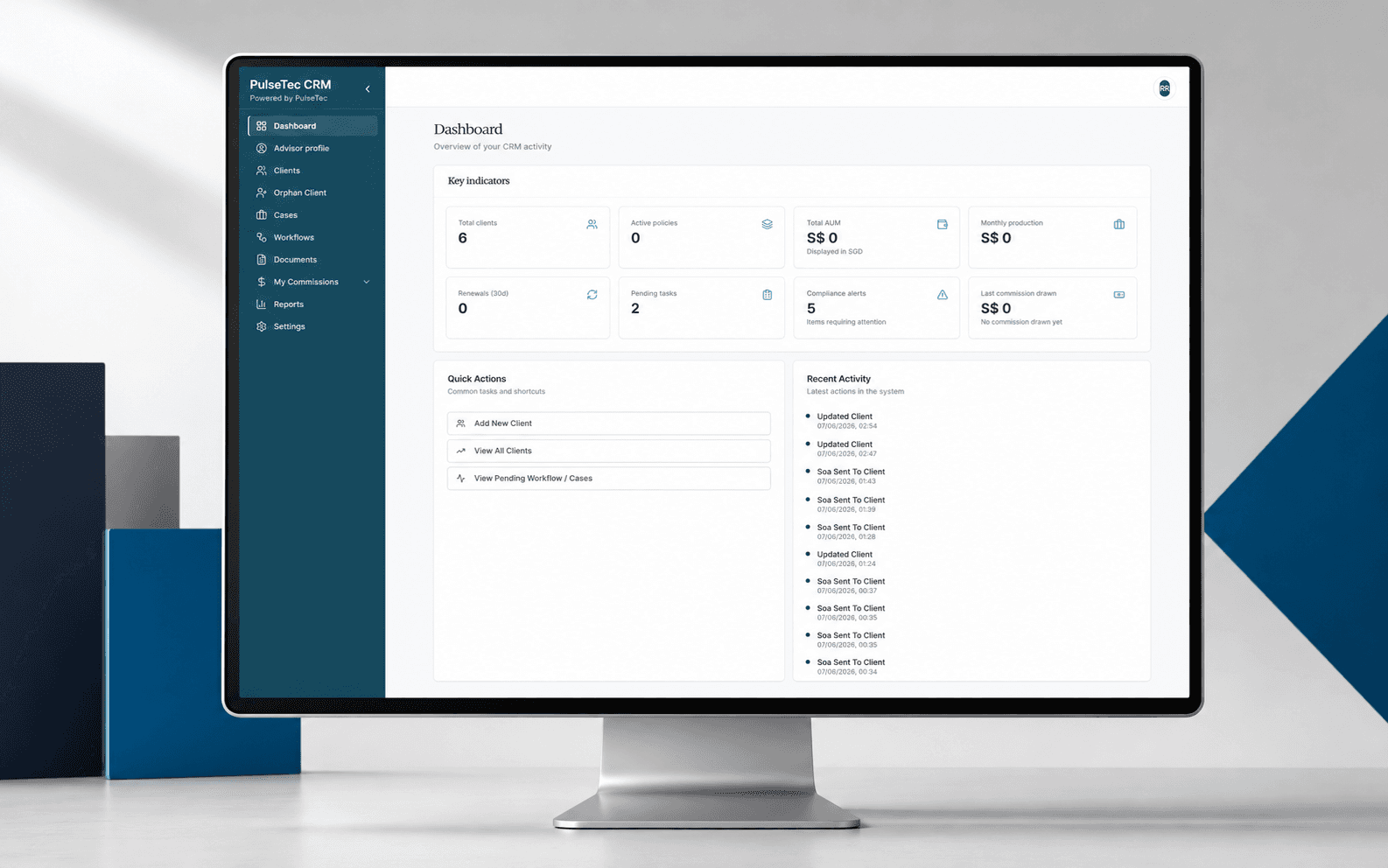
Firm-wide visibility
Clients, KYC status, and open cases on one screen.
See how Pulse CRM fits your operating model
Request a DemoThe issue is not effort — it is the lack of a system.
Fragmented Tools Fragment the Firm
Spreadsheets, inboxes, and WhatsApp handoffs split client facts, revenue, and compliance across tools—where audit questions go unanswered.
Before
Fragmented operating state
- Client facts in spreadsheets and inboxes
- Holdings and policies in disconnected files
- Commissions reconciled via email and WhatsApp
- Compliance approvals in ad hoc threads
After
One Platform. Clear Ownership of the Truth.
- One client record with explicit ownership
- Cases, documents, and revenue on the same file
- Workflows with role-scoped handoffs
- Recoverable evidence for supervision
Purpose-built for wealth and insurance advisory—not a horizontal CRM with a finance skin.
What You Run in Pulse CRM
Client & relationship control
Ownership and open obligations visible across teams.
Portfolio visibility
Holdings and policies on the same client record.
Revenue & commissions
Inflows and splits tied to cases and producers.
Documents & audit trail
Versioned files with traceable access.
Servicing workflows
Role-scoped handoffs—not inbox-led coordination.
From first touch to defensible file
- Capture client and case data
- Bind portfolios and revenue to the record
- Run approvals with roles and timestamps
- Retain documents for internal review
- Scale across teams without losing control
Built for Firms That Answer to More Than Growth Targets
- Independent financial advisers
- Wealth management practices
- Insurance advisory and bancassurance teams
- Groups operating across global markets
Trust Is Infrastructure
Built for data protection and operational explainability—without claiming certifications we do not hold.
Security
- Encryption in transit and at rest
- Role-scoped access aligned to responsibility
Operational control
- Case ownership visible across adviser, ops, and compliance
- Operational history that survives handoffs
Compliance readiness
- Jurisdiction-aligned operational discipline
- Document retention and traceability for advice files
Assess Fit on Your Terms
Walk the operating model with our team—controls, revenue, documents, and how Pulse CRM sits beside what you already run.
Leadership-level questions before a formal evaluation.
A discovery session typically takes 15–30 minutes to assess fit.
For firms that want full control over client, portfolio, and operational data.
No obligation. We typically respond within one business day.